MOMENTUM: Nicole Vasconi of IU Rural Placemaking Studio
On Community Storytelling, Exercising Civic Muscle, and Connecting Past to Future
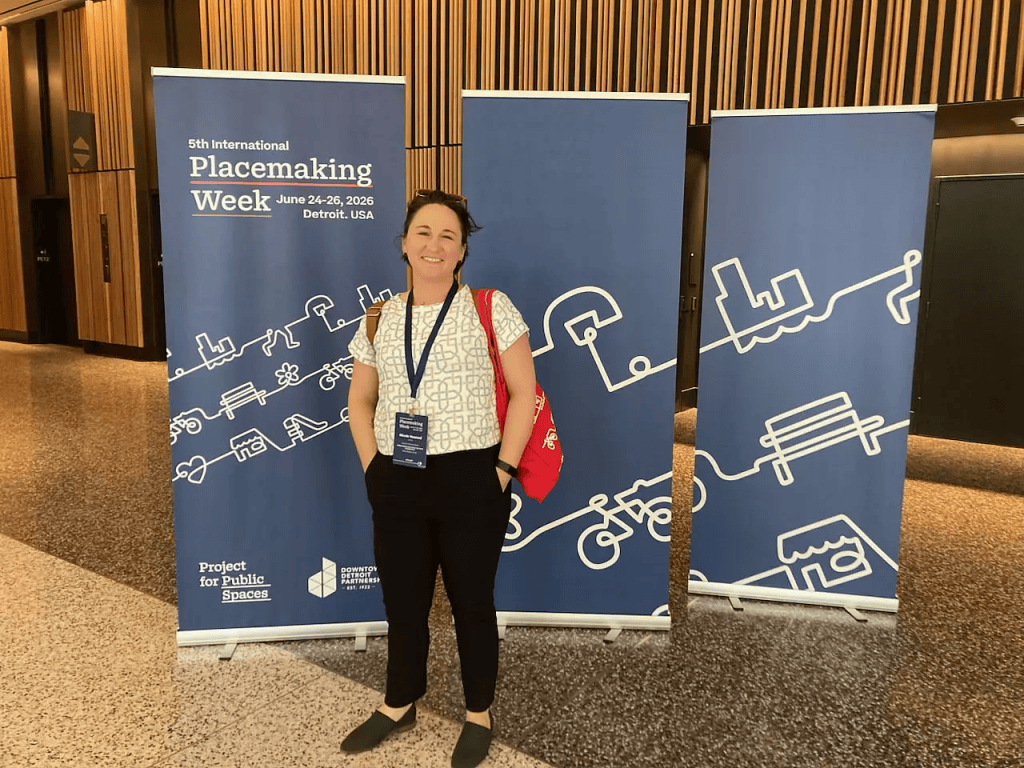
Nicole Vasconi gets right to the heart of things. A cellist, facilitator, and Quality of Place Liaison at the IU Center for Rural Engagement, Nicole reads widely, listens deeply, and doesn’t take shortcuts to understand a community’s context. Nicole is part of the leadership team directing the Rural Placemaking Studio at Indiana University’s Center for Rural Engagement. The Studio connects student designers with rural communities to support placemaking initiatives, which may include a brand identity for wayfinding and welcome signage all the way up to a town square architectural redesign.
Nicole and I met virtually for this conversation, and then in several Southern Indiana towns when I attended Regional Placemaking Series hosted by the Columbus Area Arts Council, Indiana Arts Commission, IU Bloomington Arts & Humanities Council, and IU Center for Rural Engagement. (Folks, I’m here to tell you that you can meet your heroes.) Below, we dive deeper than the “what” of her work to get into the “how.” Read on for vital ingredients of community storytelling, what it means to “go beyond murals” in placemaking, and how to connect arts and culture projects to larger movements.
This interview has been lightly edited for brevity and clarity.
Marissa Byers: You have a fascinating background in music, world heritage sites, and now rural placemaking. Walk me through how you moved from one of those focuses to the next.
Nicole Vasconi: I studied at Butler University and got my Bachelors of Arts Administration, I also studied music. During that time I got to intern and work with a ton of different arts nonprofits all around Indianapolis. That really helped me see the impact, in real time, that can happen when people have reasons to connect. I was especially drawn to organizations that are still there today like Big Car. I just loved being there. I loved the projects they did. As a classically trained musician, it was a breath of fresh air to see people having a chance to share space together, connect over art and have common experience through art in a way that was lowkey but still felt rally meaningful.
I lived in Colorado for a couple of years and worked for the Denver Botanic Gardens. That influenced how I work today, seeing that space not just as a greenhouse or a museum but as a connector and convener. It was inspirational to see the Gardens’ role in the community as being the organizer and the champion of artists in the community, connecting people together and with plants.
After that, I got accepted to a Masters in World Heritage Studies program in Germany and lived there for a couple of years. It was this 30,000-foot view of how we as people connect with one another through the built environment, through common history and heritage, and how we can explore a common sense of shared humanity through all of that.
I’m originally from Indiana; I made my way back there and found myself here in Bloomington working for the Center for Rural Engagement. The placemaking piece developed organically in my role here. Faculty like John Racek and Daniel Martinez had done interesting public art projects in communities around Southern Indiana, especially in Salem, Columbus, and Washington County. I could see firsthand the impact of this work in rural communities and smaller settings.
What it made me realize is how vital art is for the fabric of communities in a lot of different ways. I consider myself a generalist, so I think about creative placemaking as connective tissue for communities. And it’s going really well, people are passionate about where they live, about their neighbors, and keeping those connections healthy and alive. A lot of our success with the Rural Placemaking Studio is because of our community partners. They make it easy.
MB: A lot of your work focuses on storytelling—for design planning, for grant writing, even just getting people on board with a placemaking project. When you’re facilitating and planning with communities, how does that storytelling piece, or discovering and creating identity, come up?
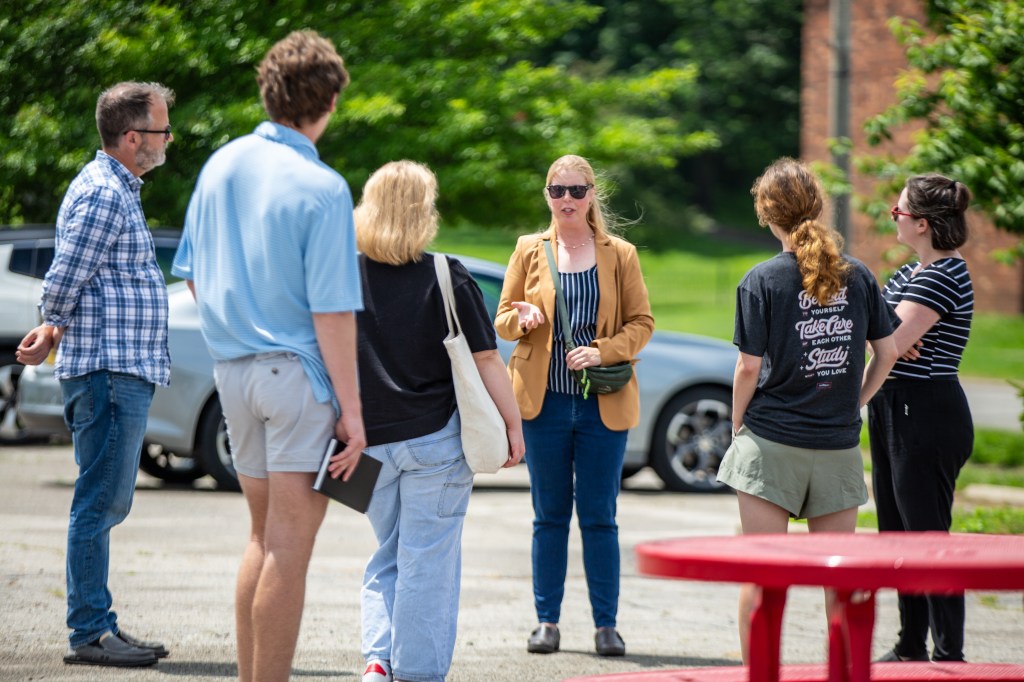
NV: It’s very iterative. The way we facilitate sessions with communities [who are interested in a placemaking project], we talk a lot about common things we want to explore in a public art project. It’s centered around community partners thinking about where they live and what’s meaningful there to them. With a lot of smaller towns, there can be geographic isolation so people don’t feel as connected. I think that can lead to people saying, “Well, this is just how we are, this is how things have always been, and there’s nothing really great here.” Appreciative inquiry is one of the methods we use. It’s almost like motivational interviewing, focusing on what’s working well and going from there.
We also talk about cultural assets and asset mapping, and that opens up people’s understanding that “Oh yeah, we do have some cool things going on here…And that makes me think about these other things I appreciate about where I live or family history.” Talking about memories is big, along with art traditions and traditional crafts that connect people to where they’re from.
In a lot of rural places, I notice there’s a huge emphasis on genealogy. It opens up a different kind of storytelling with people’s relationship to place. But then again, it’s really important to make room for all sorts of narratives like people who are new to town, or some communities we’ve worked with that have a significant increase in migrant populations from around the world.
The exercises that we do are thinking about what we can link and leverage in a space to make a project possible, but also to understand the context we’re situated in. It’s a way to get into what’s meaningful, and not just make something that’s aesthetically cool, but something that expresses who we are as a community at this point in time.
MB: It sounds difficult to balance memories, history, and those deeply meaningful ties with new changes in industries or even population demographics. I’m curious what some of those conversations have looked and felt like when you work with communities navigating how to represent themselves through art and preserving what’s important to them, without eliminating future possibilities.
NV: We’re seeing rapid change in real time with data centers. What we’re seeing there too is the removal of choice. There are a lot of communities in our state that don’t want them. If there’s a majority of people saying that, it shouldn’t be so complicated of a process that people can’t voice that. There’s a change in how communities are approaching placemaking projects. For residents, there’s a lot of emphasis on wanting to take care of where they live, make it beautiful, and celebrate things that residents have in common. On creating social cohesion, which helps people stick together in times when their community is faced with a threat, like a data center, that might not be good for them.
A lot of communities also see placemaking as an opportunity to advocate for what they do want instead of constantly having to fight against what they don’t want. It gets complicated when you have some leadership or stakeholders who see public art, particularly placemaking and fancy built environment modifications, as a way to attract more employers or attract data centers. What I’m more interested in is how the process can help people advocate better for what they want to see in their community. I think that’s a muscle we have to exercise constantly, being able to advocate for ourselves on a community level is very hard to do.
“A lot of communities also see placemaking as an opportunity to advocate for what the do want, instead of constantly having to fight against what they don’t want.”
MB: As you’re working in communities, are there some ways that the capacity building work you do helps folks build that advocacy muscle?
NV: What I see come out of the process is organizations being able to go for grants, using an outside perspective to refine their pitch, and feeling inspired to keep going after working with our students. It’s created a lot of life and momentum for communities to move forward with projects and ideas.
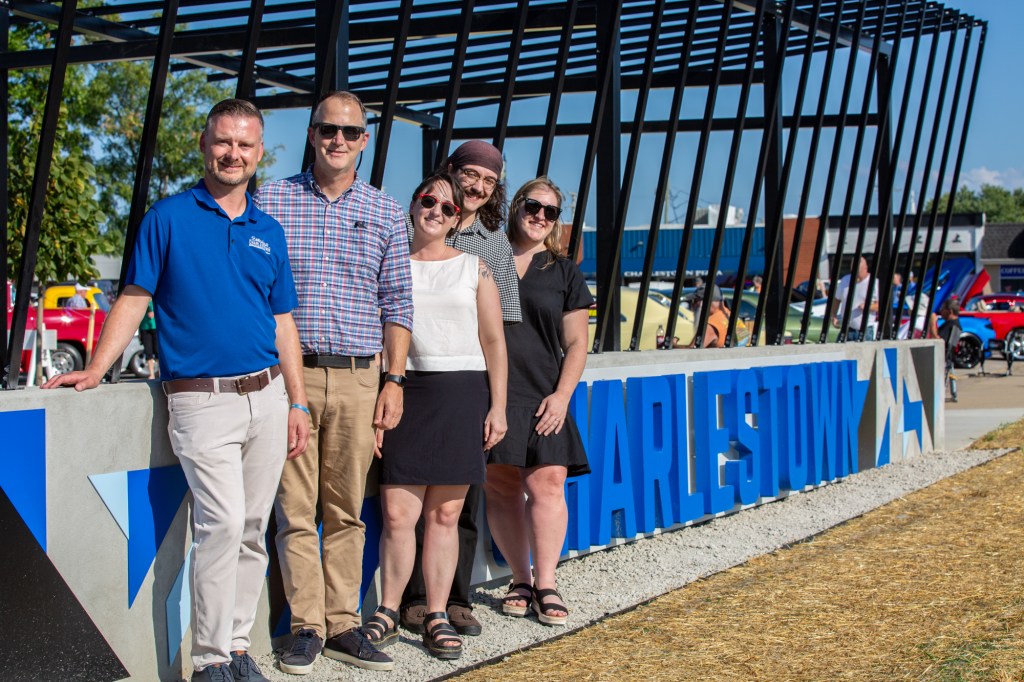
One of our partners in Charlestown redid their whole downtown square and will have a ribbon cutting ceremony at the end of August. We started working with them on a little parklet in just one corner, and they ended up taking the design our students did, worked with an architecture firm to incorporate the design, and extended it to the whole plaza.
To me it’s a visual indicator of the ripple effect of some of this work. My hope is that people begin to feel, “We were able to do this type of project. This is the kind of stuff we want in our community.” I hope it helps them continue that in all areas beyond public art, and advocate for themselves and their community development.
MB: Sometimes we see a narrative about the Midwest, especially about small towns, that “There’s nothing here,” or “This is flyover country.” I feel it’s so important to fight that narrative and show people that this is not a place you have to leave. This place is worthy because we’re here and we’re shaping it together. How does public art shift how people think about their towns?
NV: It’s challenging because getting a mural doesn’t necessarily mean, “Oh we’re good now.” One thing that helps is having community champions who drive things forward. It’s easy to lose momentum when you lose a dedicated volunteer, or a historic building needs more work than expected, or fabrication progress is slow. It takes a lot of cheerleading from people in a community to say “We’re still here, we’re still doing the work, we’re still moving things forward.”
What I’m trying to get at is that it’s not so much the public art, the deliverable, as it is the process, connecting the right people, bringing together the right resources. Public art is a vehicle for getting people together, and working out how they as a community rise to meet challenges and deciding where to go from here. It makes people realize that they have each other too.
And you know, I don’t think people think about that narrative as much as we might think. In the towns I’ve worked in, which might have a couple thousand people or less, people are ready to get to work and make a place better. There’s an increased sense of ownership. Without even realizing it, they’re confronting that narrative, digging in and working on it, shifting perceptions because they love where they live, they love their community, they love their family, and they want to see it all grow and prosper.
MB: I’m also curious about your perspective on public art and placemaking as a tool for shifting perspectives and creating inclusion.
NV: The Spencer Pride project is such a good example of that. Spencer Pride started as the local chapter of a national group and began with a festival. It’s taken them years, but it has created a strong sense of community, building a sense of hope and love and connection. That’s something I see reflected in their public art.
They recently completed a mural on the side of the Spencer Pride building. We worked with them the first summer we launched the Rural Placemaking Studio. In early conversations the project was designing a mural for a side wall, but then also creating and specking out a billboard on top of the building. They had received pushback for advertising Pride and other events, so they wanted to have a billboard on their building so they could advertise what they wanted to. It creates a sense of control, “this is who we are, we’re here, you can get to know us.” That project further solidified their place in the community and celebrated what they do with vibrant colors and honoring people important to their organization.
It’s not just the public art being there, it’s shaping how people are going to think about them. The motivation behind it is making what they do very visual in the community, and that’s important for shifting perspectives in the face of negative narratives.
MB: You use very specific language that placemaking and public art is not just beautification, but it’s strengthening communities. What does that look like?
NV: This is something I’m always working on. It’s so important to loop what you’re doing into a bigger picture. It’s not just about the mural, it has to be part of a larger strategy. The strengthening piece comes from working with the artist or artists and exploring now just how we want this to look, but also how do you want to feel when you’re here. My co-director, John Racek, talks about programming around a mural. Do you want to have events there? Would there be space for benches and shade, and create a space for socializing more? It’s about creating more opportunities for connection; there’s a lot of possibility. We help communities think about how public art fits into their goals and objectives around making residents feel more welcome, how to educate visitors about a piece of local or regional history, or communicate a sense of who they are.
MB: What’s the interaction between these discrete projects, like a mural, and larger statewide initiatives like a regional arts plan or state culture grant?
NV: The Indiana Arts Commission does an incredible job of connecting people to place, and they’re working to create a statewide arts network. Something like the READI 2.0 Arts & Culture grants connects different regions. Being part of that process helped me understand that arts and culture are essential infrastructure. Roads and bridges connect people, art connects ideas. Even if you’re not in a rural community, I think we all feel a bit isolated. It might be because of COVID, or technology, or politics. The overarching goal of statewide initiatives down to a pocket park is really just helping people feel a little more supported and connected to something bigger than themselves.
“Roads and bridges connect people, art connects ideas.”
MB: On the theme of art as infrastructure, how do you defend something that’s people might not think is as essential compared to other needs, but is, at the end of the day, how we make meaning and come together to get the other things done?
NV: I was recently listening to a podcast about survival stories, and there was one that stuck out to me. It talked about sailors that were shipwrecked off the coast of New Zealand. One of the things that helped them survive was creating a sense of home. They created shelter, but they also put a vase of flowers on the table when they ate and created a fireplace out of cement from seashells and decorated it. You’re literally on a deserted island, struggling to survive, and then thinking about making where you’re at a home. Creating that sense of home and beauty helps you keep going when things are hard. Art is essential, just in a different way. No matter what, we’re going to try to create and look for beauty. When we stop doing that, that’s when we’re really in trouble.
MB: One of the things I was struck by is how many different focus areas the Center for Rural Engagement has. Are there ways that Arts & Culture through the Rural Placemaking Studio intersect with these other areas like resilience or housing?
NV: Definitely. One of my former colleagues, Todd Burkhart, ran a creative arts program for veterans, which is such a good example of combining arts and healing for veteran populations and their families. With community resilience, often communities will interface with us through the Environmental Resilience Institute on a very specific infrastructure project, but they get talking about community planning and incorporating public art. Our community partners see things very holistically and see these things as very interconnected.
MB: You mentioned earlier that partnerships are what make your work successful. It’s the volunteers who show up and bring others into the project, it’s collaboration with funders. What are the ingredients that make partnerships successful in your work?
NV: They’re not a monolith. Every community is different. With a lot of smaller towns, you have the same people showing up over and over again. The biggest challenge to partnerships is combatting burnout. The best combination is a mix of local residents and organizations. It’s helpful when you’re able to work with somebody who has this project as part of their job, they have more resources and are set up to do the work. But you also need that local connection to understand community priorities and needs. Even if that partner who works for an organization like a community foundation and is from the community, including diverse opinions is important in forming those partnerships to add in new perspectives and insights. Not every town has their own municipality, but that can make a big difference to have a town council involved. The most essential ingredient is people being willing to work together, hear other people’s ideas and thoughts and opinions, and then share their own expertise. That’s key: that the locals are the experts.
Listening is hard. I have to remind myself constantly to stay open and not try to figure things out right away. Don’t try to solve problems while someone’s talking, just take in the information.
“The most essential ingredient is people being willing to work together, hear other people’s ideas and thoughts and opinions, and then share their own expertise. That’s key: that the locals are the experts.”
MB: I read your piece We Are Made for Connection and I love the way you consolidated the themes that show up in your work, with desire for agency being a big one. What does desire for agency look like when communities are making art or thinking big-picture about strategies for who they are becoming?
NV: I think I can answer that on an individual level. I’m not a visual artist, but what I really like about visual arts are their ability to visualize something and create a sketch or a plan. That’s similar to when I learn a piece of music, translating what’s written on the page into sound. It gives me a sense of agency that I’m able to communicate something beyond words. I might not know how it will land with someone else, but to me it’s meaningful. I play a lot of classical music, so that connects me to history and the people that played the piece before, the people who composed it, and the ideas that were popular around them at the time. The agency piece is being able to communicate what you want to say and have it be part of a larger conversation. We are constantly forced into consuming things, it feels really refreshing to make something.
MB: Another phrase that jumps out to me from your piece is ‘placemaking as a survival strategy,’ thinking about how vital this is to our communities. What would be some of your advice to community leaders or arts administrators doing this kind of work? How do we make sure placemaking is prioritized, accessible, and inclusive?
NV: Don’t stop listening. Keep asking people what they want. Give yourself time to listen to what people have to say about whatever you’re working on, show up in the community you’re working in, don’t just take for granted that you know who they are or what they’re about. Focus on building the relationship, people really appreciate that. The relationship piece is at the center of everything. If you don’t have a good working relationship, you’re not going to have a successful project. It’s also a lot of trial and error, it’s ok to go back to the drawing board. Approach it all from a place of curiosity and respect.
MB: As you’re thinking and learning in this space, are there pieces of media or thought leaders who have shaped your thinking that you’d recommend to others?
NV: So many. What I Found in a Thousand Towns by Dar Williams. She’s a singer-songwriter and from her travels wrote a book about basically everything we just talked about. I’m also reading The Quiet Before: The Unexpected Origin of Radical Ideas by Gal Beckerman. I’ve been fascinated by how people come together to share ideas, that book is focused on what led up to bigger social movements. A biography on Georgia O’Keefe, the painter, was really formative as I learned about her life and how she forged her own path. I try to read a couple books each yar on social movements and US history because it connects me to what I’m doing and helps me understand the context. We have such a fascinating and terrifying history, and thinking about where we’ve been helps me navigate the moments we’re in now.
To learn more about Nicole Vasconi and Rural Placemaking Studio at the IU Center for Rural Engagement, visit:
We Are Made for Connection: Lessons from Rural Placemaking

